Stuck in Line? How to Stay Calm at the Airport Right Now
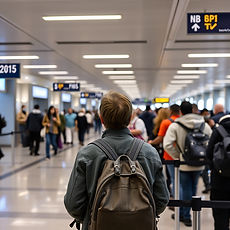
The TSA lines are long. Here’s how to get through them without falling apart.
If you’ve stepped into an airport recently, you already know: TSA lines are not normal right now. With the partial government shutdown stretching into its second month, hundreds of TSA officers have either quit or called out, and the result is a security checkpoint experience that’s testing even the most seasoned travelers. Wait times at major airports have hit two hours or more — and during spring break, with flights packed to the brim, the pressure only builds.
This situation isn’t your fault. It isn’t the fault of the TSA officers still showing up, either — many of them are working without pay, dealing with real financial hardship, and still trying to keep things moving. But knowing the context doesn’t make a two-hour line feel shorter.
So here’s what you can actually do.
1. Arrive Earlier Than You Think You Need To
Under normal circumstances, arriving two hours before a domestic flight gives you a comfortable buffer. Right now, that’s the minimum — not the goal. Callout rates at some airports have exceeded 50% on a single day, and when that happens, lines can grow faster than they move.
If you’re flying out of a major hub like Atlanta Hartsfield-Jackson (ATL), Houston’s Bush Intercontinental (IAH), or Reagan National (DCA), build in an extra hour on top of your usual arrival time. The discomfort of waiting at your gate is nothing compared to the panic of watching your boarding group close without you.
2. Check TSA Wait Times Before You Leave the House
The TSA posts real-time wait times on their website at www.tsa.gov/travel/waitimes, and the MyTSA app gives checkpoint-by-checkpoint estimates. This takes 60 seconds to check before you leave, and it can change your entire game plan — which terminal entrance to use, which checkpoint to aim for, or whether to grab coffee before or after security.
Knowledge is the opposite of anxiety. When you know what you’re walking into, the line becomes a problem you’re prepared for — not a surprise that hijacks your nervous system.
3. If You Have TSA PreCheck or CLEAR, Now Is the Time to Use Them
TSA PreCheck and CLEAR lanes are dramatically less affected by the staffing shortages, because they require fewer officers to operate. If you have either — or have been thinking about getting them — this is your sign. PreCheck enrollment takes about ten minutes online and costs $78 for five years. CLEAR uses biometric screening and is available at most major airports.
If you’re a nervous flyer or someone who finds the chaos of the general security line especially overwhelming, these programs can be genuinely life-changing during a period like this one.
4. Pack Like You’ve Done This Before (Even If You Haven’t)
When lines are backed up, the last thing you want is to be the person digging through a bag for a forgotten water bottle while 300 people wait behind you. Pack your carry-on so that the items you’ll need to remove at the checkpoint — laptop, liquids bag, shoes if you don’t have PreCheck — are right at the top. Tuck your boarding pass somewhere you can reach without opening four zipper pockets.
Being prepared doesn’t just help the line move faster. It makes you feel more competent and in control, which directly reduces anxiety.
5. Give Yourself a Mental Script for the Wait
Long lines are a stress test not because they’re physically difficult, but because they’re mentally uncomfortable. You’re standing still when you feel like you should be moving. You’re watching a clock. You’re calculating and recalculating whether you’ll make it.
A few things that actually help:
Download something before you go. A podcast, a playlist, an audiobook, a show. Have it ready so you’re not fumbling with your phone in line.
Breathe with intention. Box breathing (inhale 4 counts, hold 4, exhale 4, hold 4) is simple, invisible, and genuinely effective at calming an activated nervous system.
Reframe the wait. The line is not happening to you. It’s a step you’re completing. You’re in it, you’re moving through it, and it will end.
6. Be Kind to the Officers You See
This one isn’t a travel tip — it’s just a human one. The TSA officers working right now are doing so without paychecks. Some are dealing with eviction notices and overdrawn accounts. Some food banks have been delivering groceries directly to airport employees. They are not responsible for the political situation that created this, and they are showing up anyway.
A thank-you goes a long way. So does patience. And there is something genuinely calming about choosing kindness when everything around you is frustrating — it shifts your posture from victim of the situation to someone with agency in it.
You’ve Got This
Airports are stressful in the best of times. What’s happening right now — the staffing gaps, the long queues, the uncertainty — is a legitimately harder version of something that was already hard. If you’re someone who struggles with airport anxiety, this moment can feel like proof that flying is just too much.
It isn’t. It’s a temporary disruption layered on top of a learnable skill. The skill is navigating airports with confidence — knowing what to expect, how to prepare, and how to stay grounded when things don’t go perfectly. That skill can be taught, practiced, and owned.
That’s exactly what we do at Plan Go Wander.
Ready to feel prepared instead of panicked? Book your free 15-minute consultation at plangowander.com or call 540-212-9544.

Comments